
By: Madeline Makowski
For decades, romance movies have been depicting love to viewers. Boy meets girl, boy and girl slowly but surely fall deeply in love with each other, something nearly gets in the way of their relationship, but they overcome the odds and live happily ever after. The perfect ending for a nearly perfect story with a perfect romantic relationship. While romance movies certainly provide pleasure to viewers, they also pose some problems. According to an article in the Los Angeles Times, some social scientists have stated that romance movies may cause audiences to develop unrealistic romantic expectations, which sets them up for romantic failure and disappointment. The article explains many of the stereotypical situations often depicted in romance movies: new romantic relationships are exciting and gain the kind of intimacy that can take years to develop in a matter of weeks; baggage from the past is quickly forgiven and forgotten; marriage and long-term relationships are often depicted as being full of problems. Researchers Julia Lippman, Monique Ward, and Rita Seabrook analyzed college students’ idea of love after watching romance movies. Their study found that students with more exposure to romance movies had a greater tendency to believe that love could overcome all challenges.
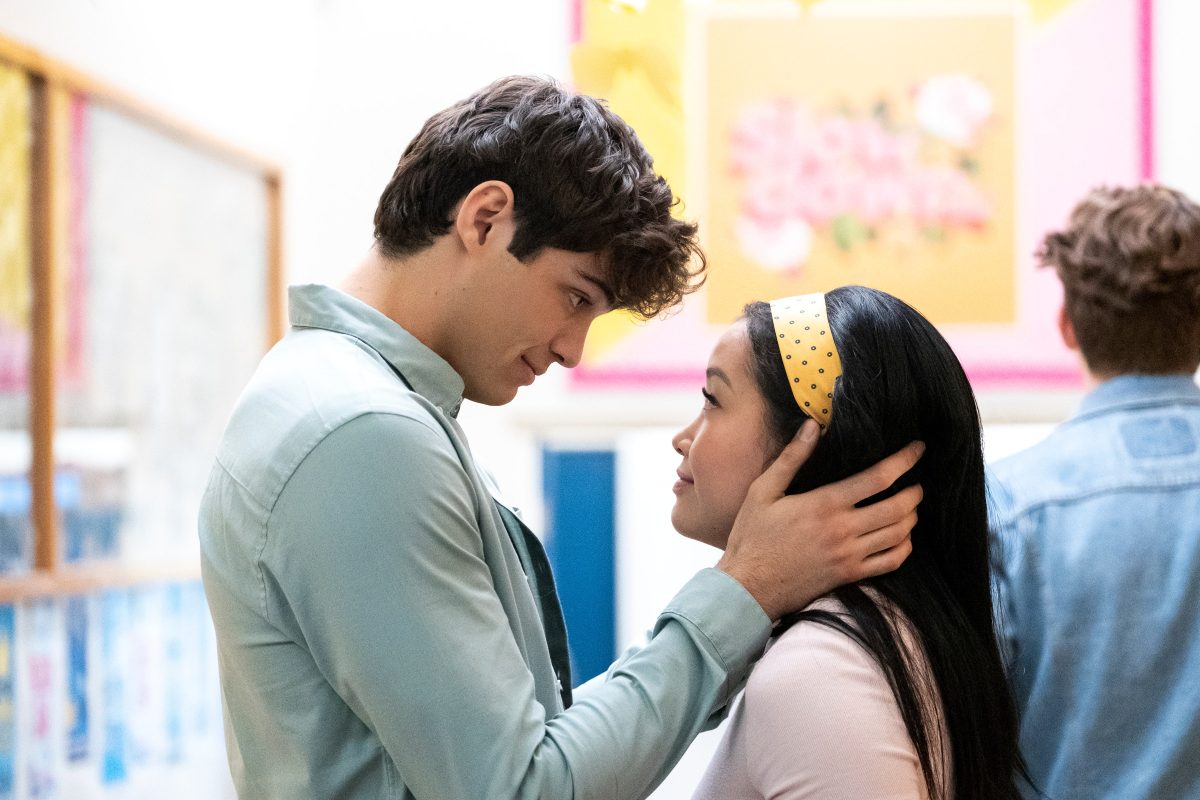
This post considers their findings in relation to the To All the Boys series. Premiering between 2018 and 2021, the three movies provide viewers with a mixture of realism and fantasy that can be expected in the romance genre. While this series explicitly critiques the fantastical elements of romance that are often found in similar films, the movies maintain many of the stereotypical romantic elements.
To All the Boys I’ve Loved Before (2018) tells the story of Lara Jean Covey, a teenage girl who struggles to navigate family dynamics and high school. After her younger sister, Kitty, sends letters that Lara Jean wrote to each boy she had feelings for growing up, Lara Jean finds herself in a fake relationship with Peter Kavinsky, one of the letter recipients. The purpose of their fake relationship is to make Peter’s ex-girlfriend, Gen, jealous and to give Lara Jean an excuse to avoid talking to Josh, another letter recipient and the ex-boyfriend of Lara Jean’s older sister, Margot. The start of their relationship is fantastical and comical, which can be seen as a nod towards how unrealistic many teen romance movies can be. By the end of the movie, Lara Jean and Peter have fallen for each other decide to make their fake relationship a real one.
At the beginning of To All the Boys I’ve Loved Before, Lara Jean is depicted as someone fascinated by romance. She is portrayed as being aware of romance movies’ too-good-to-be-true nature, yet she continues to be a fan. At one point, Lara Jean says that she enjoys reading and writing about love but thinks that real love can be scary. This part of the movie addresses the ease of romantic relationships portrayed in romance movies and how real love can be daunting. Lara Jean’s commentary is part of what makes the To All the Boys series stand out compared to other romance movies. While this series contains many fantastical and embellished romantic elements, it also explicitly acknowledges that fantasy plays a role in a majority of romance films and novels.
While parts of To All the Boys I’ve Loved Before address the conflict between realism and fantasy that can be found in romance movies, there are certain elements of the movie that lend themselves to the fantastical side of romance. Lara Jean finds herself surprised by how easy it is to be with Peter during their fake relationship. Her previous expectations that love is hard and scary seem to be challenged by how effortless her relationship with Peter is, despite the fact that their relationship up until this point is a fantasy.
As the story progresses, other people begin to plant doubt in Lara Jean’s mind about Peter. Despite the fact that Lara Jean and Peter’s relationship is turning from fake to real, Lara Jean begins to lose trust in Peter and decides to end the relationship. At this point in the movie, the audience sees a glimpse of what real relationships can look like. Romantic relationships aren’t always easy, and this conflict between Lara Jean and Peter helps show that. After ending the relationship, Lara Jean struggles with whether or not she should fight for the relationship. She says that if she acknowledges she likes him, then she risks losing him. Again, this internal conflict gives the audience a glimpse of all the emotions and thoughts that can go into relationships.
Despite all the nods to realism in To All the Boys I’ve Loved Before, the movie has the classic happy ending that is found in most romance movies. In the final scene, Lara Jean approaches Peter and makes a bold declaration of her love for him. He embraces her back fully and declares that he loves her. They kiss and walk off the screen together. While this scene makes the audience feel good, it’s not always how things in romantic relationships work out. Sometimes, romantic partners go from happy to unhappy and decide to split for good. According to the romance genre, however, romantic couples almost always completely resolve their conflict and end up happier than ever. Maybe this is the case for some people outside of romance movies, but the cycle of happy to hurt to happy again isn’t as mainstream as romance movies make it out to be.
The story picks back up again in the sequel, To All the Boys: P.S. I Still Love You (2020). The movie opens with Lara Jean saying that romance isn’t a fantasy, it’s her real life: “Fairy tales aren’t real, but sometimes happily ever after is.” Lara Jean and Peter go on romantic dates with grand gestures such as flowers and gifts. On one of these dates, the couple promises not to break each other’s hearts.
The movie very quickly leans into a fantastical portrayal of romantic relationships. One of Lara Jean’s biggest struggles throughout the move is if she should stay with Peter or pursue a relationship with John Ambrose. She comments that things are easy with John Ambrose whereas she overthinks a lot in her relationship with Peter. This comment solidifies a common theme throughout the movie series: if a romantic relationship is meant to be, it’ll be easy. It seems as though Lara Jean’s measure for a good relationship is one that’s always comfortable and effortless, and the plot rarely contradicts this.
In one of the final scenes of the movie, Lara Jean and John Ambrose share a romantic moment that culminates in a kiss. She quickly realizes, however, that she wishes she was kissing Peter instead. She and Peter reunite, and he tells her that he loves her. The movie ends with the couple kissing and floating up to the sky, a direct nod at the fantastical elements of their relationship. Despite all of the representation of realistic romantic relationships in this sequel, the audience is left with the same feeling they had at the end of the first movie. The audience now has the idealistic notion that love can conquer all. While some real relationships are often able to overcome conflict and challenges and come out stronger, conflict resolution is not always as easy and complete as it’s made out to be in movies like this one.
In the final movie of the series, To All the Boys: Always and Forever (2021), Lara Jean and Peter face the problem that every high school couple faces: college. They decide to both attend Stanford. When Lara Jean isn’t accepted, they make an alternate plan for her to attend UC-Berkeley and transfer to Stanford after her freshman year. This new plan doesn’t last long, however, because Lara Jean falls in love with NYU. She struggles with how to choose between going to her dream college or being with Peter. When she finally tells Peter that she’s going to NYU, he supports her and reassures her, despite being sad that they will be separated. This conversation between Lara Jean and Peter shows maturity and the ability to communicate. They are faced with a problem that often arises in the real world. They work through it and acknowledge that a long-distance relationship will be difficult.
Things quickly start to go downhill for Lara Jean and Peter, however. After prom, Lara Jean sneaks Peter into her room and gives him a box of mementos to remember her by when he goes to Stanford. Instead of feeling touched as Lara Jean had anticipated, Peter lashes out and says he feels like she’s trying to say goodbye. He believes that it’s inevitable that they will break up once they go to college, so they might as well go ahead and break up. This moment reflects some aspects of realism. The struggle of going to different colleges is very real in high school relationships, and many often do expect to break up. While this scene has dramatic elements, it touches on the idea of college posing a very big and real problem for high school couples.
Keeping to the classic romance pattern, things don’t stay bad for long. In a big romantic gesture, Peter shows up in Lara Jean’s backyard and declares his love for her. At the end of the couple’s romantic night together, Peter says that he knows they’ll end up together. This comment signals the movie’s shift back into fantasy. Very few high school couples can say with complete confidence that they know they’ll end up together. Some may, but it seems like a bold comment coming from a boy who hasn’t even graduated from high school.
As the movie closes, Lara Jean says that she’s always wanted the kind of love you see in movies where the boy meets a girl, they break up, make up, and live happily ever after. She then says that life is beautiful and messy and never goes according to plan. She says that love is choosing each other through all of it each day. All of these comments sound nice, but they are extremely idealistic. While Lara Jean is right that life doesn’t always go according to plan, choosing each other every day isn’t as easy as she makes it seem. This comment demonstrates the way the movie often trivializes the work that goes into relationships, thus portraying romantic relationships as more fantastical than realistic.
In conclusion, the To All the Boys series does a better job than most romance movies at providing the audience with a representation of a realistic romantic relationship. The series is not completely based on realism, however, and stays true to many classic themes often seen in romance movies. While the audience, specifically high schoolers, can catch glimpses of what a real high school relationship can look like in To All the Boys, they should be aware of the fantastical romantic elements that remain present. Fans of romance movies don’t need to abandon all their hopes and dreams of love, but they should keep in mind that the romantic standards portrayed in romance movies aren’t the same standards that should be set in the real world. At the end of the day, romance movies provide the audience with a pleasurable experience, and the fantastical elements present don’t warrant that people stop watching them. There is a certain awareness that romance movies aren’t meant to be completely realistic. Romance isn’t bad, but audiences should keep in mind that love isn’t always easy, and, as sad as it may be, love doesn’t always conquer all.

