
By Malaysia Barr, Senior Communication major
Love and Hip Hop is a reality show franchise that explores the behind the scenes lives of some of hip hop and R&B’s favorite singers and rappers with locations from Miami to Hollywood. One franchise, Atlanta, has sparked much conversation over the years. In its tenth season- it shifted gears and focused heavily on social and political issues that America is facing.
Season ten of Love and Hip Hop: Atlanta was in production during the severe lockdown and quarantine of COVID-19 pandemic. While the show discusses COVID-19, it devotes more focus to another serious topic that touched many during the pandemic: the 2020 Black Lives Matter Protests. These protests sparked nationwide unrest after the killing of George Floyd by a white police officer, Derrick Chauvin. As the verdict for the Chauvin Trial neared, Love and Hip Hop captured the moments leading up to the verdict.
Love and Hip Hop: Atlanta showed the cast’s reaction to the verdict during the first moments of the sixth episode. Each major cast member could be seen through home videos displaying anxious and fearful looks into their personal recording devices. By allowing the home recordings to be shown, it gives a more reflective feel. The scene starts off with a sling song entitled “I Can Feel the Change” by Celeste that immediately draws viewers in with its slow and reflective lyrics. News footage from CNN is shown as many of the cast members reacts. One cast member, Lil Scrappy voiced his opinion of the verdict saying, “My song and daughter now have a chance in this world.” Another cast member, Karlie Redd, said “We won.” Other cast members had tears in their eyes and some shouted and clapped for joy. The scene ended with photographs of George Floyd, Eric Garner, Sandra Bland, Breonna Taylor, and Ahmaud Aubrey being shown.
This moment of the show is important because unlike other reality shows (Love Island, Big Brother, and Survivor), Love and Hip Hop: Atlanta decided to represent the seriousness of race relations in America. Because the show caters to a minority audience, their approach to episode content and format was different. The scene, lasting roughly two minutes, was introduced at the beginning of the episode. To viewers, this shows that VH1 was putting these issues and struggles literally at the forefront of Love and Hip Hop, acknowledging how important they are in everyday life.. Many of the show’s cast spoke directly about the verdict, but huge emphasis was placed on the black men of the show. Lil Scrappy, Mendecees, and Kirk spoke longer than the women about the conviction and in great depth. The show’s producers allow this moment to play out in great length because they are connecting and emphasizing the effect that police brutality has on the black man.
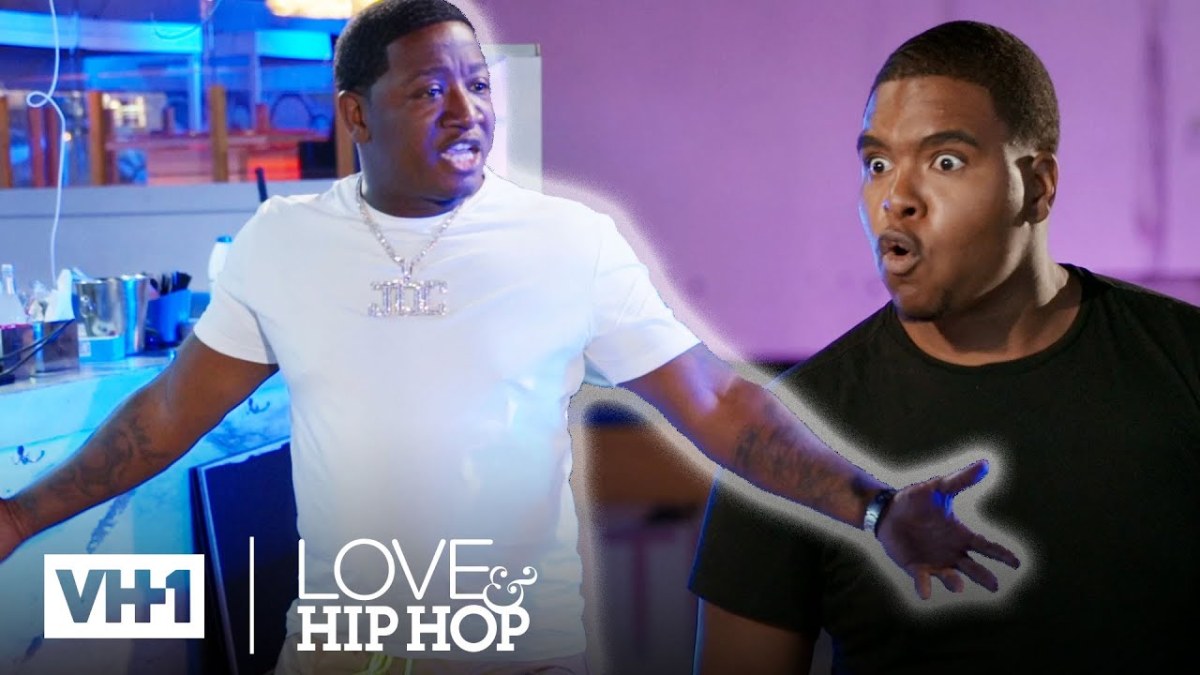
In another moment, Love and Hip Hop: Atlanta continues their emphasis on the black man and societal pressures in the eighth episode of the tenth season. This episode explores the complicated relationship between rapper Yung Joc and his son, Amoni. The scene starts with intense music amping up the meeting of Yung Joc and Amoni in Joc’s closed nightclub. The camera switches frames between Joc and Amoni, mimicking the classic showdown scene from Western films. The conversation between the two men revolves around Joc’s desire to keep his son from bad influences, but fails when his son’s newfound “friends” end up coming to Joc’s club and causing an altercation. This altercation turned deadly when one person was killed. In this one scene, Yung Joc and his song get into a heated argument that turns physical. Yung Joc says in his confessional, “In today’s climate it’s harder being a black man trying to raise a black son,” He then says to his son, “I want you to be the best you.” Yung Joc’s desire to establish positivity can be shown in his words. He doesn’t want his son to live up to the stereotypical expectations of themselves that many black men deal with. They are expected to either join gangs, be in jail, or have an early death. By airing this moment, Love and Hip Hop: Atlanta shuts down the notion that black men in America do not have high expectations for themselves or their children.
After this episode aired, there was much discourse on Twitter about what transpired between Yung Joc and Amoni. Although there was some backlash on how Yung Joc handled the situation with Amoni, there was also a lot of positive feedback:
- “Young Joc did what any real father would do. Either his son get it or he doesn’t *insert shrug emoji*. Life is hard out here!!! Especially for a black man.”
- “Wow. Catching up on #LHHATL and the conversation between Young Joc and his son. Sheesh. These kids need to realize they should cherish the advice parents pass along to them. Hanging around people who shoot at folks will land you in a world of trouble.”
- “I’m all for Young Joc putting that Madea fear into his son’s ass!! Boy listen to yo father! He trying to tell yo ass something!! #LHHATL”
Love and Hip Hop: Atlanta’s focus on black men and their relationships and societal pressure is important because it focuses on real discourse. Many reality shows are scrutinized for their “scripted” plots and becoming more and more dramatized. However, Love and Hip Hop Atlanta goes against this stereotype by representing an important national social and political issue throughout a season. Their desire to live outside the box and create real content for reality TV is starkly different from other reality shows like Big Brother and television shows like Gilmore Girls. Instead of ruling out the minorities, Love and Hip Hop decides to take on minority faceted issues. They allow pedagogic moments to stand in place of moments that could be labeled as “entertainment.” This is shown through the audience reaction to Yung Joc and Amoni’s argument. Many fans of the show empathized and understood Yung Joc’s perspective. This shows that Love and Hip Hop is not just concerned with their ratings, but concerned with actually allowing their audience to truly connect with the messages they are sending.
To conclude, Love and Hip Hop Atlanta is a fiery franchise that not only seeks to entertain its audience but to teach them on social and political issues. Because the show caters to the black and brown diaspora of America, it’s focus on issues that affect those communities stands out. This is because the diaspora of black and brown people in the U.S comes from a long and complicated history filled with those people fighting to have a voice for themselves. VH1 recognizes the voice of those who have previously been forced into silence. That makes the Love and Hip Hop franchise so profound because it does not seek to further box in already marginalized groups. Instead it desires to to break social and cultural barriers to engage its audience for teachable moments that will last beyond the one hour per week running time.


