
by Malaysia Barr
Cancel culture has become a big trend over the last few years. In this day and age, anything can be canceled: shoes, snacks, and probably most prominently- people. People all over the world have been “canceled” for centuries, due to acts deemed unacceptable for the time in which they lived. Presently, cancel culture has evolved from being burned at the stake to publicly hated on social media. One celebrity that has been canceled in recent years is the R&B singer R. Kelly.
R. Kelly, born Robert Kelly, first became a singing sensation in the early 1990s when he signed with Jive Records. On a fast track to stardom, Kelly soon became a major star best known for his sensual and erotic love ballads. Through multiple decades, Kelly’s popularity grew his fame expanded past his vocal talents as the R&B star ventured into production work (producing the smash hit “I Believe I Can Fly” for the blockbuster movie Space Jam).
Kelly’s fame was met with the infamous notoriety regarding his growing criminal record which exposed the R&B singer for his role in illeglal crimes against minors and women over the course of his career. In 1994, Kelly (aged 27), illegally married the late Aaliyah Haughton, who was 15 years old at the time. Before the marriage, Kelly and Haughton worked together on her debut album, ironically titled, Age Aint Nothin’ But A Number. The pair would dress alike and were photographed together often. While the circumstances of the marriage are still unclear, it is rumored that Kelly got the late singer pregnant. When the marriage certificate was released and backlash from the public became the forefront of both singers, Aaliyah’s family had the marriage annulled.

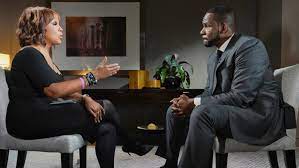
In 2002, Kelly was under fire yet again for child pornography tapes, wherein a circulating video showed him urinating on an underage girl. After a trial, Kelly was found not guilty of child pornography. In the 2010s Kelly was alleged to be running a sex cult with women of whom he bid no contact with the outside world. These allegations came to a head when the viral Lifetime documentary, Surviving R. Kelly, made national news and eventually led to his second series of criminal charges of aggravated criminal sexual abuse. When the Surviving R. Kelly documentary came out, Kelly’s fame began to dwindle. In an interview with Gayle King, Kelly denies all the claims against him. In September of 2021, Kelly was found guilty and has been incarcerated ever since.
Despite all of these legal problems and backlash he has gotten from the public, Kelly has remained an icon and beloved figure for many. This raises the age-old question: can one separate the art from the artist? The case of R. Kelly presents this question in one of the most complex ways. This is because, despite decades of allegations, he has remained fairly successful, working with major artists like Micheal Jackson, Jay Z, and Usher. While researching Kelly as a case study of cancel culture, I have uncovered at least three different types of cancelation when people try to decide whether the art and/or the artist should be removed: artist celebration, art acceptance, and complete rejection.
The first type of cancellation within cancel culture is called artist support. This occurs when some people may feel that the person who is getting canceled is innocent and should be celebrated. In Kelly’s case, this can be seen all through social media. The following are tweets in support of Kelly:
- @freerkelly4ever“R. KELLY IS INNOCENT! #FREERKELLY”
- @RkellzShady: “#FreeRKelly. People who ask are you Still LISTEN
ING to RKELLY. HELL @ DA M’F YEAH. PEOPLE REALLY THINK THEIR NOT (MUSIC NOTE EMOJI) TO KELLZ, THEY BETTER RESEARCH THE WRITER AND PRODUCER OF THE MUSIC THEIR LISTENING TOO (THREE LAUGHING EMOJIS) YOU CAN’T MUTE RKELLY (100 EMOJI) - @CelebratingRK: “If U an R. Kelly Fan, & U just wanna be around other #RKelly fans, wanna celebrate the king of #RnB music & life, & if U sick & tired of all that YouTube drama, come to my Facebook group “Celebrating R. Kelly” where it’s drama free. It’s literally over 109,000 of us just vibing”
These people refuse to acknowledge the wrongdoings of the person in question and seek to uplift and support the person who is getting canceled. In Kelly’s case, the tweets above represent those who choose to believe the artist wholeheartedly, with no questions asked.
The second category within cancel culture is art acceptance. These are the people who believe that the artwork (songs, paintings, etc) have no relationship with the person behind the art. By solely accepting the art, they are actively creating a divide between the artist and the art. Many people love Kelly’s music. As mentioned earlier, Kelly wrote and produced the hit song, “I Believe I Can Fly”. Ths inspirational songs lyrics: “I used to think that I could not go on/ And life was nothing but an awful song/But now I know the meaning of true love/I’m leaning on the everlasting arms/If I can see it, then I can do it/If I just believe it, there’s nothing to it/I believe I can fly/I believe I can touch the sky” has resonated with people for decades since it’s release because of the inspirational and gospel undertones the songs have. Many people still resonate with the song and believe that it has brought them through hard times. Art accepting people refuse to allow Kelly’s personal actions to stain artwork that has provided a sense of hope throughout difficult times of their lives. These people are not necessarily accepting the crimes Kelly has done, but have decided not to banish his music. This is because they have allowed the music to connect with them on a personal level, which in many cases does not reflect Kelly at all.
Lastly, the third category of people in cancel culture are those who decide to completely reject the canceled individual in question. This means that they refuse to look at the artist’s past contributions to society, but instead, look at why the person is being canceled. For R. Kelly, this came in the form of YouTube banning his channel. By choosing to do this, YouTube is rejecting the art that Kelly has produced and wants their audience to see him for the crimes he has committed. This group of people typically decide to permanently cancel the person, without any other considerations.
In conclusion, cancel culture has many dimensions, and understanding different types of cancelation can clarify what people mean when they talk about “cancel culture”. R. Kelly’s case represents this as there are three types of cancellation for people in the entertainment industry: artist celebration, art acceptance, and complete rejection. While the categories themselves are subject to change, the constant is the fact that cancel culture has evolved as a way that people talk about controversial figures in popular culture, while seeking justice for those whose voices may not be heard otherwise.


