
by Madeline Makowski and Eliza Moore
With the dominance of social media as an outlet for pop culture coverage, the act of “canceling” has emerged as a way to mass “cancel” an artist’s significance. While cancel culture has certainly brought awareness to both legal and moral concerns of celebrities, artists that become “canceled” are often exiled and lose credibility both as a person and in their art. Artist Taylor Swift has certainly experienced the effects of cancel culture. When #TaylorSwiftIsOverParty trended as the #1 tweet worldwide in 2016, Taylor suffered the consequences of being “canceled” on social media.
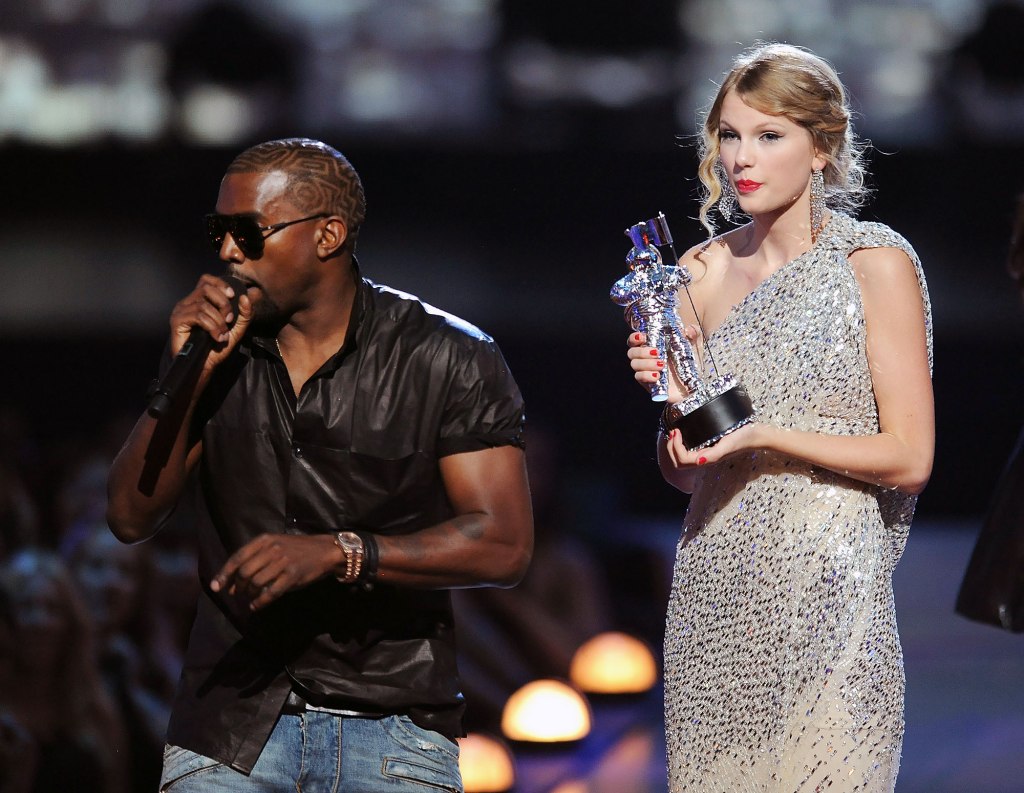
Much controversy came into the public eye around attacks on Taylor from artist Kanye West, first after he ambushed her VMA award speech in 2009. The controversy between the two continued when Taylor claimed to not know about the inclusion of West’s lyric about her in his song “Famous” stating that he made her famous and referred to her as a bitch. While Kim Kardashian released a phone call between Taylor and Kanye where Taylor gives permission to mention her in the song, there was no evidence that she knew she would be referred to in the derogatory and demeaning terms as stated in the song.
Soon after Kim Kardashian released the clips of this phone call, #TaylorSwiftIsOverParty began to trample Twitter feeds, as many rallied in favor of Kanye’s side of the argument. Although Taylor never agreed to the song lyrics, she was accused of acting like a “victim”, causing her to disappear for a year from the public eye almost entirely. In an interview with Vogue, she stated “I just wanted to disappear. Nobody physically saw me for a year. And that was what I thought they wanted.” Physically and virtually, Taylor stayed secluded. No fans heard from her, no music was released, and she did not post on any social media platform for over a year.
Taylor’s interview with Vogue demonstrated how cancel culture often ignores the fact that celebrities are human. With social media, people can post hurtful content in a matter of seconds. Little thought is required to join a cancel culture movement, so people don’t take the time to think about how hurtful their words can be. In her interview with Vogue, Taylor said, “When you say someone is canceled, it’s not a TV show. It’s a human being.”
In the documentary Miss Americana, Taylor discusses how many people who enter the music industry just want to be seen and recognized for their work. She says, “We’re people who got into this line of work because we want people to like us, because we were intrinsically insecure, because we liked the sound of people clapping because it made us forget about how much we’re not good enough.” Taylor’s vulnerability on this topic shines a light on the vulnerable position many musical artists put themselves in. They choose to share pieces of themselves with the world with the hopes of being seen as enough, so when efforts to cancel emerge, there can be real damage.
Oftentimes, cancel culture attacks the character of individuals rather than their work. When a person’s character is put into question, it can be difficult to show the world that they are wrong. In Miss Americana, Taylor says, “When people decided I was wicked and evil and conniving and not a good person, that was the one that I couldn’t really bounce from because my whole life was centered around it.” When #TaylorSwiftIsOverParty started trending, it wasn’t Taylor’s work as an artist that was called into question. Rather, it was her character and actions outside of her work that was put under scrutiny. Not only was the hashtag used to criticize Taylor about the drama with Kim and Kanye, but it was also used to criticize her dating patterns and way of life in general. Efforts to cancel often attack the morality of artists. While there are times when artists’ moral character can and should be called into question, vocal minorities often take advantage of movements to cancel artists and use them as opportunities to attack artists they simply do not like.
In a heartfelt moment in Miss Americana, Taylor says, “When people fall out of love with you, there’s nothing you can do to make them change their mind. They just don’t love you anymore.” Because of cancel culture, Taylor felt that she had lost the love and appreciation she had worked so hard to gain. The comments from the world scrutinizing everything Taylor said and did left her feeling hopeless that she would ever be loved the same again.
Whether a person is famous or not, the persistent unkindness of others can cause one’s mental health to plummet. Just because Taylor has a large fan base doesn’t mean she can’t be affected by the negativity of others. At the time of #TaylorSwiftIsOverParty, so many people were speaking unkindly about and to Taylor. This negativity took a toll on Swift, who admits in Miss Americana that she had struggled with putting her worth in the opinions of others. When the thing Taylor had put her worth in started to fall apart, so did she.
In response to efforts to cancel her, Taylor removed herself from the public eye. She felt that was both what the world wanted and what she needed. She also felt that the only way to handle everything she was going through was to channel it into her music. In her interview with Vogue, Taylor said, “It was the only way I could preserve my mental health and also tell the story of what it’s like to go through something so humiliating.” She also told Vogue that her song “You Need to Calm Down” was partially inspired by cancel culture.
People started calling Taylor a snake on social media, a title that was spurred on by a tweet by Kim Kardashian. Kim claimed that Taylor had given Kanye full consent to mention her in “Famous.” She issued a tweet in Kanye’s defense on National Snake Day, and wrote, “Wait it’s legit National Snake Day?!?!? They have holidays for everybody, I mean everything these days!” The tweet was followed by a series of snake emojis. When Taylor decided to reemerge into the public eye, she used this title to her advantage. She started by wiping her social media accounts completely blank. Then, she posted videos on her Instagram, Facebook, and Twitter of a snake. Many fans saw this as Taylor reclaiming the image of the snake that she had been given at the height of her feud with Kim and Kanye. For so long, people used the image of a snake to accuse Taylor of being deceitful and not owning up to what they believed was the truth. Through the images and videos of snakes posted on Taylor’s social media and the 30-foot cobra statue on stage during her Reputation tour, Taylor made the statement that she was going to stay true to who she was and wasn’t going to let anyone tell her otherwise.
In many ways, the release of Reputation and Taylor’s Reputation era signified a new beginning. Taylor’s previous statement about wanting to be excluded from the narrative with Kim and Kanye was gone, and instead, she chose to take control of it. The music video for “Look What You Made Me Do” makes a nod at all of Taylor’s public personas. Some of these personas include Taylor when she received the MTV Video Music Award in 2009 and Kayne interrupted her, Taylor from the Fearless tour, Taylor from the Red tour, Taylor from the “You Belong With Me” music video, Taylor from the “Shake It Off” music video, and Taylor from the 1989 tour. While Taylor’s new music seemed to make fun of all her public personas, the death of the Old Taylor was true in that the Taylor who put so much weight on what others thought of her was gone.
The damaging effects of cancel culture are so evidently shown through the mental struggles that Taylor Swift dealt with after #TaylorSwiftIsOverParty trended. With resilience to push against the hateful remarks, she has certainly revived and redeemed her presence and importance in today’s culture.


