By Hillary Hardig and Liv Provosty
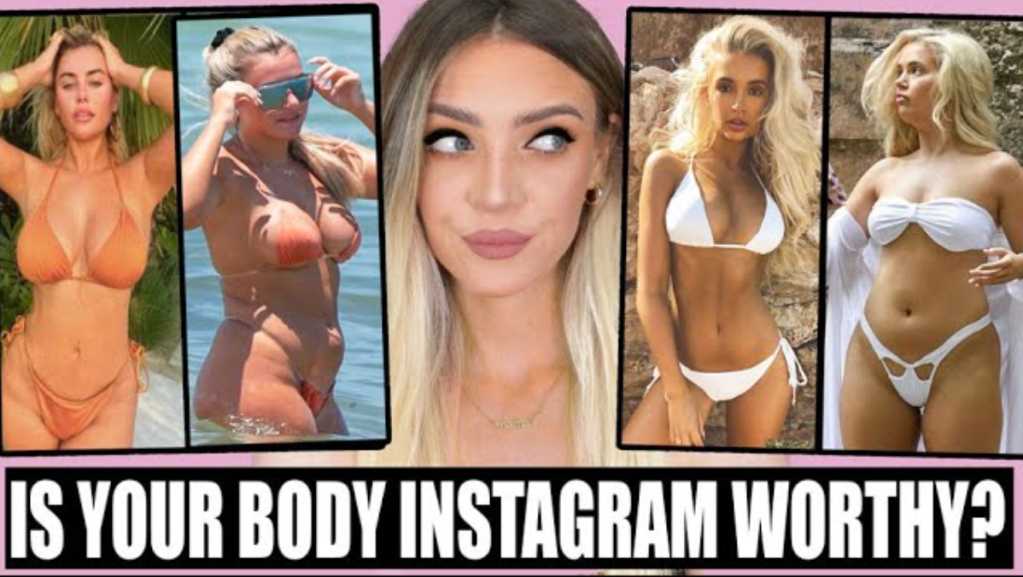
Beauty Standards are Perpetually Evolving
How do we determine what makes a person beautiful? Women are routinely pressured to fit certain standards of beauty. But like fashion and interior design, these standards shift over time varying by culture and era. The question is: Why do we fight so hard to meet the standards of perfection when we know that what is considered perfect is continuously changing? In Ancient Greece, the ideal woman was plump and fair-skinned, signifying wealth. During the Victorian era, women achieved an hourglass figure by cinching their waist with corset undergarments. For women of the 1920’s, beauty was androgyny. Instead of emphasizing their curves, women masked their chests, and wore clothes that downplayed the waist and hips. During the Golden Age of Hollywood, the hourglass figure was brought back to life with Marilyn Monroe as the ideal standard of beauty putting an end to the boyish figure trend that emerged in the Roaring Twenties. Coined “heroin chic”, models of the 1990s were so thin some thought their bodies mimicked those of an unhealthy drug user. With the development of social media, beauty standards are now treated like the trends of fast fashion and being reshaped at the click of a button.
Runway Models and Cover Girls to Influencers and Insta Baddies
The blueprints for “the ideal” standards of beauty have shifted significantly in the last twenty years. Print media is dying in comparison to digital, and it is creating the new frontier of marketing and advertising. Social media plays the role of democratizing content production. It is an incredible innovation that has allowed for the expansion of free speech, art, and learning at the largest scale in history. This democratization has also shifted the culture of “beauty:” Now social media users have access to the means of producing, editing, and sharing content. The phenomenon of staging a magazine cover worthy photoshoot requires a photographer, stylist, beauty team, professional photo editors, a supermodel or celebrity. This process can be equated to an update to an influencer’s Instagram feed. Posts consist of the influencer, her outfit-possibly sent as part of a clothing brands influencer promotion program- her makeup, a tutorial could be produced for followers, camera self-timer, and a photo editing application. Similar factors of achieving the desired standard of beauty are present in both scenarios. However, the digital scenario may be even more dangerous, because “beauty” is presented constantly. And it’s not just a rack of magazine covers, it’s an endless feed, an algorithm that curates an explore page of one image of perfection after another.
Influencers do not intentionally market themselves as unattainable standards for beauty, in contrast their success is often linked to “relatability.” The “reliability” factor makes it easier for the influencer and follower to bond, to become linked in a parasocial relationship that sells an image of themselves and often sells a product. According to Dr. Brooke Erin Duffy, an assistant professor at Cornell University studying self-presentation on Instagram, “Nobody wants to be called a fake. Influencers very much feel they need to present themselves authentically while getting the best image possible.” But as Duffy states, this “relatable” factor often does not extend itself to unflattering images or vulnerabilities (x). And with this parasocial relationship built upon the pretense of “relatability” it opens up avenues for comparison more directly than the 2000’s Vogue cover or the Chanel runway show. This assertion aligns with social comparison theory, meaning that an individual, often a girl or young woman, compares themselves at a higher tendency to someone they perceive as similar to themselves (x). While it may not seem that a fifteen year old girl and a young woman with millions of followers have a lot in common, similarity has been crafted between them through the follower and influencer dynamic. This dynamic has flattened the hierarchies of image production allowing influencers to feel “more real” in comparison to a model on a cover the fifteen year old girl sees in line at checkout.
Facetune
The popular photo-editing app FaceTune is self-described as “providing a range of powerful tools giving you the ability to precisely edit your selfies and have fun expressing the best of YOU-giving you the confidence in creating & sharing photos, knowing you are showing the best of yourself” (x). This application is very popular, with over sixty million downloads (x). Since the coronavirus lockdown downloads of FaceTune have increased by twenty percent (x). FaceTune is known for its easy to use interface allowing for photo retouching and selfie alterations like skin smoothing and teeth-whitening to slimming body modification. The ability to alter one’s physical appearance drastically with such ease opens up a serious concern over self image, body dysmorphia, eating disorders, and body modification procedures.
Startling statistics have been reported in link to use of Facetune. According to a study from the International Journal of Eating Disorders, teens who edit their appearance in photos with applications like Facetune were more likely to report high scores related to eating and body image issues (x). Additionally, Dr. Ramani Durvasula, critical psychologist and professor, credits the phenomenon of photo editing at this level to causing individuals to seek cosmetic alterations at younger ages (x). All of this to conclude with, Zeev Farbman, the CEO of Lightricks, the parent company of Facetune, “[I] didn’t intend for users to manipulate their bodies on the app,” although it is advertised very clearly as a selling-point of the application, “I’m not sure it’s our place to decide how people use the app, (x).” Farbman does not welcome the association between Facetune and damaging body image, however if the developers of the technology distance from responsibility for this phenomenon, then how are the dangerous consequences like increased eating disorders, body dysmorphia, and body modification checked. It assumes that the weight of responsible, safe use of the application falls onto the shoulders of the users. However, some may not see young and impressionable users as entirely capable, particularly when the stakes are so high.
Where Does the Responsibility Lie?
In September of 2021, the Wall Street Journal reported on a collection of internal Facebook documents which it says exhibits how the platform is exceedingly aware of the harmful effects Instagram has on the mental health of teens. The reported research, done by Facebook, focuses on mental health effects linked to young users being shown certain content, which can then cause or exacerbate depression, eating disorders, or other mental health issues. It’s no surprise that Facebook would not publicly disclose these findings. Facebook’s data collection policy plays a central role in whether users see, or do not see specific content. The Wall Street Journal reported that Instagram made at least one out of three teen girls feel worse about their bodies, and that, “13% of British users and 6% of American users traced the desire to kill themselves to Instagram”.
In efforts to grow engagement and financial gains for shareholders, Instagram needs to retain user’s attention and keep them active for long periods of time. The Journal reports that, “Facebook executives have struggled to find ways to reduce Instagram’s harm while keeping people on the platform, according to internal presentations on the topic”. Facebook says it plans to develop a version of Instagram for children under the age of 13. Worried about children’s safety, a group of 44 US attorneys general wrote to Facebook to reconsider the new version. Facebook says even though kids under the age of 13 aren’t supposed to sign up for the photo-sharing app now, many still do. Facebook responded saying that the company would not show ads “in any Instagram experience developed for people under the age of 13”. But harm to teens isn’t only coming from advertisements. Content that exploits the vulnerability of children is. In either case, sizable data collection is what enables the harm.
Democratic FTC Commissioner Rohit Chopra tweeted, “Given the financial incentives embedded in its surveillance-based business model, it is yet another sign that the company cannot be trusted with our data.” Big tech needs to be asking themselves if their profit pushing business models built on the exploitation of teenagers are worth the potential damage done. If so, then to what end?