#TaylorSwiftIsOverParty: Kanye vs. Taylor & The Effects of Cancel Culture on Mental Health

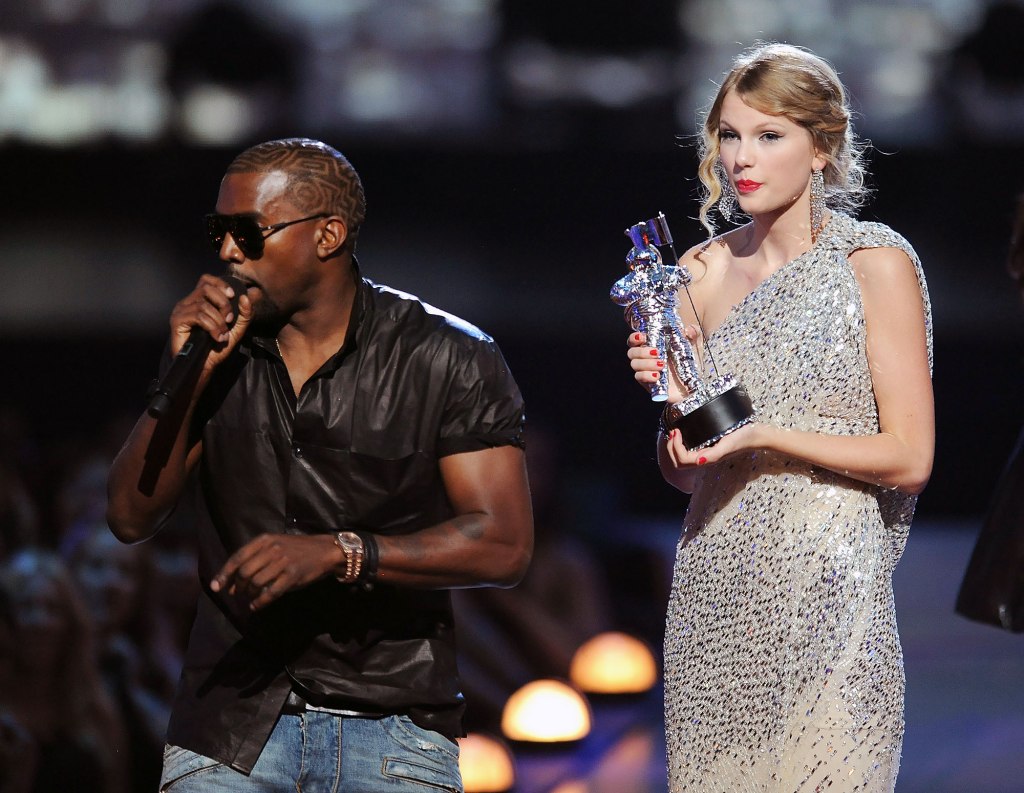
NEW YORK – SEPTEMBER 13: Kanye West takes the microphone from Taylor Swift and speaks onstage during the 2009 MTV Video Music Awards at Radio City Music Hall on September 13, 2009 in New York City. (Photo by Kevin Mazur/WireImage)

by Madeline Makowski and Eliza Moore

With the dominance of social media as an outlet for pop culture coverage, the act of  “canceling” has emerged as a way to mass “cancel” an artist’s significance. While cancel culture has certainly brought awareness to both legal and moral concerns of celebrities, artists that become “canceled” are often exiled and lose credibility both as a person and in their art. Artist Taylor Swift has certainly experienced the effects of cancel culture. When #TaylorSwiftIsOverParty trended as the #1 tweet worldwide in 2016, Taylor suffered the consequences of being “canceled” on social media.

 Much controversy came into the public eye around attacks on Taylor from artist Kanye West, first after he ambushed her VMA award speech in 2009. The controversy between the two continued when Taylor claimed to not know about the inclusion of West’s lyric about her in his song “Famous” stating that he made her famous and referred to her as a bitch. While Kim Kardashian released a phone call between Taylor and Kanye where Taylor gives permission to mention her in the song, there was no evidence that she knew she would be referred to in the derogatory and demeaning terms as stated in the song. 

Soon after Kim Kardashian released the clips of this phone call, #TaylorSwiftIsOverParty began to trample Twitter feeds, as many rallied in favor of Kanye’s side of the argument. Although Taylor never agreed to the song lyrics, she was accused of acting like a “victim”, causing her to disappear for a year from the public eye almost entirely. In an interview with Vogue, she stated “I just wanted to disappear. Nobody physically saw me for a year. And that was what I thought they wanted.” Physically and virtually, Taylor stayed secluded. No fans heard from her, no music was released, and she did not post on any social media platform for over a year. 

Taylor’s interview with Vogue demonstrated how cancel culture often ignores the fact that celebrities are human. With social media, people can post hurtful content in a matter of seconds. Little thought is required to join a cancel culture movement, so people don’t take the time to think about how hurtful their words can be. In her interview with Vogue, Taylor said, “When you say someone is canceled, it’s not a TV show. It’s a human being.”

In the documentary Miss Americana, Taylor discusses how many people who enter the music industry just want to be seen and recognized for their work. She says, “We’re people who got into this line of work because we want people to like us, because we were intrinsically insecure, because we liked the sound of people clapping because it made us forget about how much we’re not good enough.” Taylor’s vulnerability on this topic shines a light on the vulnerable position many musical artists put themselves in. They choose to share pieces of themselves with the world with the hopes of being seen as enough, so when efforts to cancel emerge, there can be real damage.

Oftentimes, cancel culture attacks the character of individuals rather than their work. When a person’s character is put into question, it can be difficult to show the world that they are wrong. In Miss Americana, Taylor says, “When people decided I was wicked and evil and conniving and not a good person, that was the one that I couldn’t really bounce from because my whole life was centered around it.” When #TaylorSwiftIsOverParty started trending, it wasn’t Taylor’s work as an artist that was called into question. Rather, it was her character and actions outside of her work that was put under scrutiny. Not only was the hashtag used to criticize Taylor about the drama with Kim and Kanye, but it was also used to criticize her dating patterns and way of life in general. Efforts to cancel often attack the morality of artists. While there are times when artists’ moral character can and should be called into question, vocal minorities often take advantage of movements to cancel artists and use them as opportunities to attack artists they simply do not like.

In a heartfelt moment in Miss Americana, Taylor says, “When people fall out of love with you, there’s nothing you can do to make them change their mind. They just don’t love you anymore.” Because of cancel culture, Taylor felt that she had lost the love and appreciation she had worked so hard to gain. The comments from the world scrutinizing everything Taylor said and did left her feeling hopeless that she would ever be loved the same again.

Whether a person is famous or not, the persistent unkindness of others can cause one’s mental health to plummet. Just because Taylor has a large fan base doesn’t mean she can’t be affected by the negativity of others. At the time of #TaylorSwiftIsOverParty, so many people were speaking unkindly about and to Taylor. This negativity took a toll on Swift, who admits in Miss Americana that she had struggled with putting her worth in the opinions of others. When the thing Taylor had put her worth in started to fall apart, so did she.

In response to efforts to cancel her, Taylor removed herself from the public eye. She felt that was both what the world wanted and what she needed. She also felt that the only way to handle everything she was going through was to channel it into her music. In her interview with Vogue, Taylor said, “It was the only way I could preserve my mental health and also tell the story of what it’s like to go through something so humiliating.” She also told Vogue that her song “You Need to Calm Down” was partially inspired by cancel culture.

People started calling Taylor a snake on social media, a title that was spurred on by a tweet by Kim Kardashian. Kim claimed that Taylor had given Kanye full consent to mention her in “Famous.” She issued a tweet in Kanye’s defense on National Snake Day, and wrote, “Wait it’s legit National Snake Day?!?!? They have holidays for everybody, I mean everything these days!” The tweet was followed by a series of snake emojis.  When Taylor decided to reemerge into the public eye, she used this title to her advantage. She started by wiping her social media accounts completely blank. Then, she posted videos on her Instagram, Facebook, and Twitter of a snake. Many fans saw this as Taylor reclaiming the image of the snake that she had been given at the height of her feud with Kim and Kanye. For so long, people used the image of a snake to accuse Taylor of being deceitful and not owning up to what they believed was the truth. Through the images and videos of snakes posted on Taylor’s social media and the 30-foot cobra statue on stage during her Reputation tour, Taylor made the statement that she was going to stay true to who she was and wasn’t going to let anyone tell her otherwise.

In many ways, the release of Reputation and Taylor’s Reputation era signified a new beginning. Taylor’s previous statement about wanting to be excluded from the narrative with Kim and Kanye was gone, and instead, she chose to take control of it. The music video for “Look What You Made Me Do” makes a nod at all of Taylor’s public personas. Some of these personas include Taylor when she received the MTV Video Music Award in 2009 and Kayne interrupted her, Taylor from the Fearless tour, Taylor from the Red tour, Taylor from the “You Belong With Me” music video, Taylor from the “Shake It Off” music video, and Taylor from the 1989 tour. While Taylor’s new music seemed to make fun of all her public personas, the death of the Old Taylor was true in that the Taylor who put so much weight on what others thought of her was gone.

The damaging effects of cancel culture are so evidently shown through the mental struggles that Taylor Swift dealt with after #TaylorSwiftIsOverParty trended. With resilience to push against the hateful remarks, she has certainly revived and redeemed her presence and importance in today’s culture.

Cancel Culture: The Art Versus the Artist

by Malaysia Barr

Cancel culture has become a big trend over the last few years. In this day and age, anything can be canceled: shoes, snacks, and probably most prominently- people. People all over the world have been “canceled” for centuries, due to acts deemed unacceptable for the time in which they lived. Presently, cancel culture has evolved from being burned at the stake to publicly hated on social media. One celebrity that has been canceled in recent years is the R&B singer R. Kelly. 

R. Kelly, born Robert Kelly, first became a singing sensation in the early 1990s when he signed with Jive Records. On a fast track to stardom, Kelly soon became a major star best known for his sensual and erotic love ballads. Through multiple decades, Kelly’s popularity grew his fame expanded past his vocal talents as the R&B star ventured into production work (producing the smash hit “I Believe I Can Fly” for the blockbuster movie Space Jam). 

Kelly’s fame was met with the infamous notoriety regarding his growing criminal record which exposed the R&B singer for his role in illeglal crimes against minors and women over the course of his career. In 1994, Kelly (aged 27), illegally married the late Aaliyah Haughton, who was 15 years old at the time. Before the marriage, Kelly and Haughton worked together on her debut album, ironically titled, Age Aint Nothin’ But A Number. The pair would dress alike and were photographed together often. While the circumstances of the marriage are still unclear, it is rumored that Kelly got the late singer pregnant. When the marriage certificate was released and backlash from the public became the forefront of both singers, Aaliyah’s family had the marriage annulled. 

R. Kelly and Aaliyah dressing alike in an interview in the mid 1990’s

In 2002, Kelly was under fire yet again for child pornography tapes, wherein a circulating video showed him urinating on an underage girl. After a trial, Kelly was found not guilty of child pornography. In the 2010s Kelly was alleged to be running a sex cult with women of whom he bid no contact with the outside world. These allegations came to a head when the viral Lifetime documentary, Surviving R. Kelly, made national news and eventually led to his second series of criminal charges of aggravated criminal sexual abuse. When the Surviving R. Kelly documentary came out, Kelly’s fame began to dwindle. In an interview with Gayle King, Kelly denies all the claims against him.  In September of 2021, Kelly was found guilty and has been incarcerated ever since. 

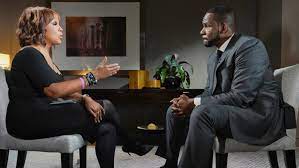
Gayle King interviewing R. Kelly

Despite all of these legal problems and backlash he has gotten from the public, Kelly has remained an icon and beloved figure for many. This raises the age-old question: can one separate the art from the artist? The case of R. Kelly presents this question in one of the most complex ways. This is because, despite decades of allegations, he has remained fairly successful, working with major artists like Micheal Jackson, Jay Z, and Usher. While researching Kelly as a case study of cancel culture, I have uncovered at least three different types of cancelation when people try to decide whether the art and/or the artist should be removed: artist celebration, art acceptance, and complete rejection.

The first type of cancellation within cancel culture is called artist support. This occurs when some people may feel that the person who is getting canceled is innocent and should be celebrated. In Kelly’s case, this can be seen all through social media. The following are tweets in support of Kelly: 

  1.  @freerkelly4ever“R. KELLY IS INNOCENT! #FREERKELLY” 
  2. @RkellzShady: “#FreeRKelly. People who ask are you Still LISTEN
    ING to RKELLY. HELL @ DA M’F YEAH. PEOPLE REALLY THINK THEIR NOT (MUSIC NOTE EMOJI) TO KELLZ, THEY BETTER RESEARCH THE WRITER AND PRODUCER OF THE MUSIC THEIR LISTENING TOO (THREE LAUGHING EMOJIS) YOU CAN’T MUTE RKELLY (100 EMOJI)
  3. @CelebratingRK: “If U an R. Kelly Fan, & U just wanna be around other #RKelly fans, wanna celebrate the king of #RnB music & life, & if U sick & tired of all that YouTube drama, come to my Facebook group “Celebrating R. Kelly” where it’s drama free. It’s literally over 109,000 of us just vibing”

These people refuse to acknowledge the wrongdoings of the person in question and seek to uplift and support the person who is getting canceled. In Kelly’s case, the tweets above represent those who choose to believe the artist wholeheartedly, with no questions asked. 

The second category within cancel culture is art acceptance. These are the people who believe that the artwork (songs, paintings, etc) have no relationship with the person behind the art. By solely accepting the art, they are actively creating a divide between the artist and the art. Many people love Kelly’s music. As mentioned earlier, Kelly wrote and produced the hit song, “I Believe I Can Fly”. Ths inspirational songs lyrics: “I used to think that I could not go on/ And life was nothing but an awful song/But now I know the meaning of true love/I’m leaning on the everlasting arms/If I can see it, then I can do it/If I just believe it, there’s nothing to it/I believe I can fly/I believe I can touch the sky” has resonated with people for decades since it’s release because of the inspirational and gospel undertones the songs have.  Many people still resonate with the song and believe that it has brought them through hard times. Art accepting people refuse to allow Kelly’s personal actions to stain artwork that has provided a sense of hope throughout difficult times of their lives. These people are not necessarily accepting the crimes Kelly has done, but have decided not to banish his music. This is because they have allowed the music to connect with them on a personal level, which in many cases does not reflect Kelly at all. 

Lastly, the third category of people in cancel culture are those who decide to completely reject the canceled individual in question. This means that they refuse to look at the artist’s past contributions to society, but instead, look at why the person is being canceled. For R. Kelly, this came in the form of YouTube banning his channel. By choosing to do this, YouTube is rejecting the art that Kelly has produced and wants their audience to see him for the crimes he has committed. This group of people typically decide to permanently cancel the person, without any other considerations. 

In conclusion, cancel culture has many dimensions, and understanding different types of cancelation can clarify what people mean when they talk about “cancel culture”. R. Kelly’s case represents this as there are three types of cancellation for people in the entertainment industry: artist celebration, art acceptance, and complete rejection. While the categories themselves are subject to change, the constant is the fact that cancel culture has evolved as a way that people talk about controversial figures in popular culture, while seeking justice for those whose voices may not be heard otherwise.

Culture Critically podcast episode 02: Data collection

In the second episode of the Culture Critically podcast, join host James Gilmore in conversation with students Hillary Hardig, Liv Provosty, and Anna Transou as they discuss issues in data collection and privacy. We cover recent controversies around child tracking in the Life360 application, the ethics of Netflix’s data collection, and what it means that Apple and Facebook are coming to blows over the terms of data tracking.

You can also listen to us on Apple Podcasts: https://podcasts.apple.com/us/podcast/culture-critically/id1613727533?i=1000556313451

A Big Fat Fight Over Consumer Data Privacy: Apple’s IOS Updates Uncover Facebooks Appetite For User Data

by Hillary Hardig

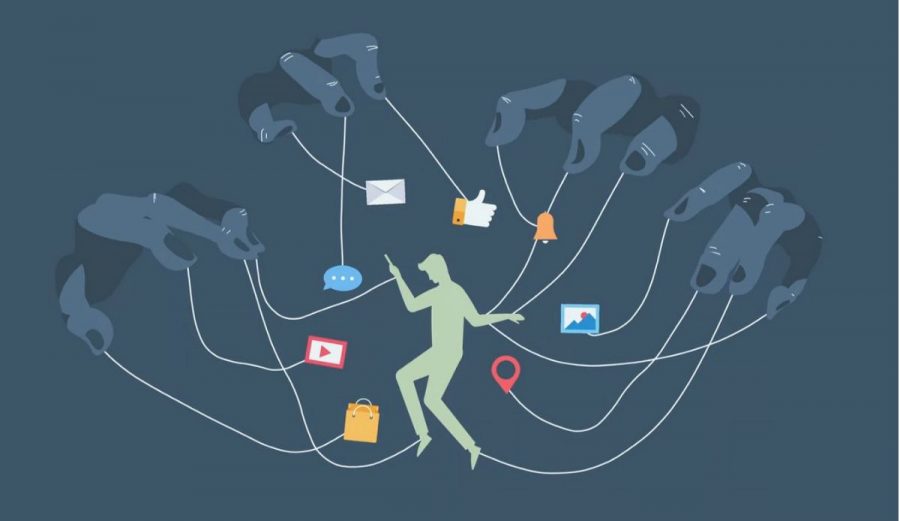
Image taken from The Skier Scribbler

Users of Facebook have long dealt with ongoing changes to the application’s privacy policy. And these changes aren’t necessarily wrong. It’s now been seventeen years since the launch of the platform by creator, Mark Zuckerberg, and seventeen years since Facebook led an explosion within the realm of social media. However, Facebook’s privacy policy is often scrutinized for its language and structure of the terms, making it difficult for users to clearly choose what data they are or are not willing to share with the company. The company’s data collection policies have not gone unnoticed and users are becoming increasingly aware of internet privacy. In turn, large corporations like Apple are making strides to ensure customers that their privacy is being prioritized. This has led Facebook and Apple, two of tech’s top companies, into a war over privacy.

In 2018, Facebook rewrote its Terms of Service (TOS) and Data Use Policy (DUP) to use more plain language to clearly illustrate to users how their data is collected and used. This was likely due to theories that Facebook collects data from user microphones and SMS messaging. In 2021 TOS and DUP changed again, this time revamping the layout of data settings on the platform and decentralizing the settings into multiple different places. In a statement explaining the renovation of settings, Facebook commented, “Settings are now grouped into six broad categories, each containing several related settings: Account, Preferences, Audience and Visibility, Permissions, Your Information, and Community Standards and Legal Policies … We’ve unbundled the Privacy Settings category and moved the settings previously contained within it into other categories.” Now, if users want to change a privacy setting, they must navigate multiple pages and scan through each page individually looking for specific toggles to turn off and on. Regarding this change, Facebook stated in the same statement that “we’re confident this new settings page will make it easier for people to visit their settings, find what they came for, and make the changes they want.” But to users, controlling  their privacy settings just got a lot more difficult.

In a 2018 article published in the journal of  Social Media + Society, authors Jennifer Jiyoung Suh and Eszter Hargittai asked participants to answer questions about their Facebook use and attitudes towards privacy. Interestingly, the study found that there is a considerable discrepancy between participants’ intended online privacy management and its actual effectiveness. The study stated that “despite participants’ perceived high level of knowledge and skills of online privacy management on Facebook, the majority of the posts collected for this study were shared with more people than the participants had intended” (p. 9). Since then, Facebook has been fighting a battle with Apple who, with the release of newer iOS versions, requires that app developers explicitly ask for permission to track users’ behavior across Apple’s App Store and the internet. But gaps in Apple’s push to increase privacy don’t fully limit Facebook’s ability to collect location information from your iPhone without your awareness. 

In 2021, researchers Anatoliy Gruzd, Joanne McNeisha, Lilach Dahoah Halevib,  and Martin Phillipsa studied the change in user privacy concerns and behavior on Facebook after exposure to a privacy literacy intervention called Data Selfie. The study found that after viewing their privacy information from Data Selfie, participants became increasingly more concerned about their online privacy. However, privacy intervention tools like these are likely underutilized. Platforms like Facebook require contracts of adhesion to be signed as written when a user creates a profile. This research suggests that because the contract must be signed as stated, users may be less likely to read and understand these contracts when knowing they cannot implement changes. Additionally, there are no regulations that protect users against the actions of Facebook and address users’ perceptions to motivate privacy-protective behavior.

In September of 2021, Facebook announced new capabilities for business owners following the danger to its ad targeting by Apple’s IOS 14 privacy initiative. Facebook testified that Apple’s changes would have a negative impact on the small businesses that rely on Facebook ad targeting to find and attain customers. In an interview with The New York Times, Apple’s CEO Tim Cook came back at Facebook’s comment saying, “I think that you can do digital advertising and make money from digital advertising without tracking people when they don’t know they’re being tracked.” However, Apple didn’t budge on any of its IOS privacy updates. Instead, Facebook was forced to implement a new way of connecting businesses to their target audience. 

Among some of the changes, Facebook has made is a way for customers to explore businesses from their News Feed posts. When a user clicks on a topic like beauty, fitness, or home decor, users will be redirected to explore businesses related to their interests. This new system has two main advantages. The first is that users may stumble across a new business that relates to their interests. The second is that this feature allows Facebook to create its data set of users who like certain types of content. Eventually, businesses may be able to pay for higher placement on the News Feed, working a similar system to Google’s search bar advertising. Along with this roll out in 2021 were multiple other new business advertising tools like organic lead generation tools on Instagram, and quote requests via Messenger.

Changes to Facebook’s TOS and DUP are likely to continue. Efforts made by companies like Apple aren’t keeping Facebook from collecting data. The company continues to try and find ways to extract data from users, regardless of the effect on individual users or businesses. Luckily, battles between companies like Facebook and Apple are likely causing users to become more mindful of their personal data and different perspectives between companies bring the conversation of data collection to the consciousness of the public.

Disentangling Life360’s Location Data

by Liv Provosty

The conversation surrounding data collection concerns has become more mainstream. It is no longer confined to conspiracy theorists worried about being chipped and tracked by governments or powerful corporate entities. With the advancement of location tracking software on cell phones and wearable devices, we have purchased the “chip” willingly. As technology has changed, so has our society’s desire for more information, but this access to information does not begin and end with the individuals we allow in our connected cloud. When was the last time you saw a privacy policy on your computer screen?  Did you read it? Did you care to read it? The data one signs away in a privacy policy is often an after thought, justified by practical purposes of location tracking technology. Location tracking is a valuable technological advancement for navigation purposes and distress signaling, however it is crucial to examine location tracking’s potentially manipulative consequences and issues of consenting to “the eye in the sky” application Life360. 

Understanding Life360 

Life360 is a smartphone application that claims to enable location safety, driving safety, digital safety, and emergency assistance. With three tiers of membership ascending in price from silver, gold, then platinum, Life360 offers safety options in tiers of how much safety users are willinging to purchase. Specifically designed for families, Life360 provides parents with access to a week’s worth of location data at minimum as well as data on driving and phone battery percentage. This access to data is marketed as an access to safety. It follows a notion that every parent wants their child to be safe, therefore every parent should track their child to guarantee safety. One slogan reads “Know where they are without asking” and shows a smiling fifteen year old, presumably leaving his high school. In an application designed to ease parental worries, the parents are the ones making the choices in terms of giving consent for location data collection. Minors do not necessarily have the right to give consent for their own tracking. Some parents may argue if they bought the phone for their child then as parents they should have authority regarding location tracking. However, as with other modes of parental control, cunning teenagers always find ways to resist.  

The Kids are Not Alright (with being tracked by Life360)
The most direct backlash from teenagers to being tracked was found on the popular application, TikTok. The majority of TikTok users are GenZ and, like many other companies, Life360 also has a presence on TikTok. TikTok CEO, Chis Hulls, faced very direct backlash from young people who had negative experiences regarding Life360. The hashtag #banlife360 reached seventy five million views on TikTok. Led by teen user, Drew Polenske, a viral campaign, summoned other teenagers to bombard the app with negative reviews dramatically shifting the app’s ranking on the Apple Store from 4.7 to 2.6. This drop got the attention of Chris Hulls and, in an untraditional twist, he hired Drew Polenske as a consultant signaling for reconciliation within the community of enraged youth. Hulls sought Polenske’s advice for application improvements and Hulls published content geared directly towards disgruntled TikTok users. The overwhelming shared sentiment under the #banlife360 was regarding the way the application is used as a means of parental control, which led to the addition of the “Bubble” feature that offers a more generalized zone of your location. While this is not a hugely significant change, it was a great public relations and marketing move by Hulls to meet teenagers where they are, TikTok. However, this move on Hull’s behalf was a mode of co-opting the resistance movement and instead of continuing to resist control, Polenske became an agent of control through his Life360 consulting role. 

Should Anyone Be Alright (with being tracked by Life360)

Teenagers had their own concerns regarding location tracking on Life360. But should the more willing participants also have some concerns regarding the privacy of their location data? In December of 2021 news broke that Life360 was selling precise location data of approximately thirty three million users. User data from Life360 was sold to location data companies, X-Mode, SafeGraph, and Cuebiq and what those companies may have done with the data is beyond a Life360 user’s control. Both Cuebiq and SafeGraph operate in connection with the Centers for Disease Control and Prevention, while X-Mode sells data to the United States Department of Defense who have a history of military contracting. In addition to those business relations, location data was also sold by Life360 to firms dealing with target advertising.

Although these data transactions are not inherently being used for insidious purposes, the greater issue is that the average user is unaware that these transactions are even occurring and does one ever really know what intentions of are “the eye in the sky” at all.  Recently, as of January 2022, Life360 announced “a new data partnership” that “significantly advances privacy initiatives.” The deals with data companies, X-Mode, SafeGraph, and Cuebiq have since been dropped. Although those companies may still have several years worth of past data and locations in their possession. At present Life360 is working with two data collection agencies: Placer.ai and Arity, which are owned by the insurance company, AllState.  Arity’s precise location data is used to track car usage and car crashed, demonstrating how insurance companies also value location tracking as an asset for evaluating young drivers Placer.ai commonly uses location data for vehicle traffic, web traffic, and purchase data. Life360 made no comment on whether the Placer.ai data would be precise and it is unclear if the data sold has any clear connection to safety features or if it  is being used strictly by the company as a means of building revenue off of users.

Concluding Thoughts 

All of this information can feel overwhelming and difficult to understand for an individual unfamiliar with the world of data collection. Perhaps this world of data literacy is kept difficult to understand for a reason. Location data is an asset individuals create, but once we do so, it quickly vanishes from our perception. In the age of simultaneously playing the role of consumer and the product, it is important to evaluate which role one values more and what privacy sacrifices one is willing to make, for oneself and for the young people one may track. 

Algorithmic Curation of Culture on Netflix

by: Anna Transou

Within the recent decades, humankind has experienced a massive shift from how we expect media content to be presented to us. Alongside the introduction of artificial intelligence and supercomputers, the modern human seems to be quite comfortable with its current relationship with the algorithms that act as our own personal shopping or movie recommendation assistants. But how much do we really know about exactly how we’re being prescribed content, and why haven’t we all taken a step back to even think about the further implications of a computer generated culture such as the one we’re headed to, if not already in now? To answer some of these questions I have homed in on Netflix, the film and television platform with a whopping 213.6 million subscribers, to dive into the implications of humanity complacently entering into an agreement with computerized technologies in the supposed “co-creation” of culture. 

Despite Netflix users interacting with and benefitting from the personalized suggestions that the Netflix Recommendation System (NRS) offers to us, what do we really know about how it works? Regarded as “trade secrets”, the complex algorithms are technically incomprehensible by the average consumer, but we do know some things about how they are designed and intended to function. In a 2014 article containing an interview with Todd Yellin, VP of Netflix product innovation, The Atlantic discovered more about how the media platform has accrued a “stockpile of data about Hollywood entertainment that is absolutely unprecedented.” In a process to reverse-engineer Hollywood, Netflix used large teams of people to deconstruct a myriad of elements within a vast collection of film and television to create microtags which would then help sort content into roughly 76,897 microgenres. Yellin boasted to The Atlantic about the efficacy of the algorithm’s personalization which aims at “putting the right title in front of the right person at the right time,” illustrating the formula’s analogous nature to that of Facebook’s highly customized NewsFeed. In conjunction with the accumulation and implementation of user data in creating personalized suggestions, the creation of NRS involved a process of probing the content individually, inspiring an investigation for the implications for algorithmically curated content. 

The overarching concerns lie in the vexing unknown of what it means to involve computerized algorithms in the creation, definition, and curation of culture, a domain that has historically been reserved for humans. Netflix and many other algorithmically controlled platforms are primarily withholding a majority of the power in the distribution of cultural content, despite what their parent companies advertise to users. In the specific case of Netflix (but also applicable to many other media platforms), “reality gets coded into data for the machines, and then decoded back into descriptions for humans.” Such concerns over who has the power and authority to shape culture and ideas dates back at least to Marx and Engels’ discussion of the ruling class’ control of media and mental production. Whereas the curation of culture was once solely determined by the upper classes of whom held the means to produce media, today we are placing the significant task of cultural prescription into the inanimate hands of artificial intelligence. The construction and suggestion of cultural tastes by algorithms repositions human autonomy as, potentially, a secondary force, in which Netflix users provide the system with ample consumer data to facilitate the operation of recommendations in a one-way distribution of media content. The imbalance of power between human and machine occurs in the restraints placed upon users in that there is no true recourse for the consumer to edit their viewing history, interact socially with others on the platform, as well as the limited binary rating system which merely asks for a user to give content a thumbs up or down. Communication scholar, Fatima Gaw illustrates this dynamic further in pointing to the “restrictions [that] exist in the same paradigm where users are supposedly empowered by free choice and self-determination of their cultural experiences.” After all, Netflix promotes that “our members control what they watch” despite the constraints implemented within the platform to limit user agency in constructing their own individualized taste preferences apart from the algorithm’s prescriptions. The rigidity of the NRS “restrict[s] and often supersede[s] user agency” as it operates neither in an emancipatory or deterministic manner, but instead “inhibits users from deviating from the formula it prescribes.”

With proprietary goals in mind, Netflix’s recommendation system was not built to encourage diversity of media within the platform, instead, the algorithm operates to feed content to users similar to what they have already been favorable towards. The system’s primary functions bring up concerns of the development of cultural echo-chambers, such as has been discovered on social media apps like Facebook and Instagram. Further research must be done in order to discern what effect media echo-chambers will have on the development of culture and society, and how humans can fight back against an algorithmically produced mono-culture of the future that lacks cultural diversity.

Culture Critically podcast episode 01: Representation and awareness

by James N Gilmore

In the first episode of the Culture Critically podcast, join host James Gilmore in conversation with students Malaysia Barr, Sara Ciplickas, Madeline Makowski, and Eliza Moore as they discuss issues in representation and awareness stemming from their recent blog posts. We cover diversity and inclusion in awards shows, what it means for something to be realistic and relatable in popular culture, whether or not we see ourselves in the media we consume, and discuss the degree to which we can evaluate positive changes in representation in the film and television industries.

Or download the episode on Apple Podcasts: https://podcasts.apple.com/us/podcast/culture-critically/id1613727533?i=1000553554248

To All the Boys: Representation of Realistic Romantic Relationships

By: Madeline Makowski

For decades, romance movies have been depicting love to viewers. Boy meets girl, boy and girl slowly but surely fall deeply in love with each other, something nearly gets in the way of their relationship, but they overcome the odds and live happily ever after. The perfect ending for a nearly perfect story with a perfect romantic relationship. While romance movies certainly provide pleasure to viewers, they also pose some problems. According to an article in the Los Angeles Times, some social scientists have stated that romance movies may cause audiences to develop unrealistic romantic expectations, which sets them up for romantic failure and disappointment. The article explains many of the stereotypical situations often depicted in romance movies: new romantic relationships are exciting and gain the kind of intimacy that can take years to develop in a matter of weeks; baggage from the past is quickly forgiven and forgotten; marriage and long-term relationships are often depicted as being full of problems. Researchers Julia Lippman, Monique Ward, and Rita Seabrook analyzed college students’ idea of love after watching romance movies. Their study found that students with more exposure to romance movies had a greater tendency to believe that love could overcome all challenges.

This post considers their findings in relation to the To All the Boys series. Premiering between 2018 and 2021, the three movies provide viewers with a mixture of realism and fantasy that can be expected in the romance genre. While this series explicitly critiques the fantastical elements of romance that are often found in similar films, the movies maintain many of the stereotypical romantic elements.

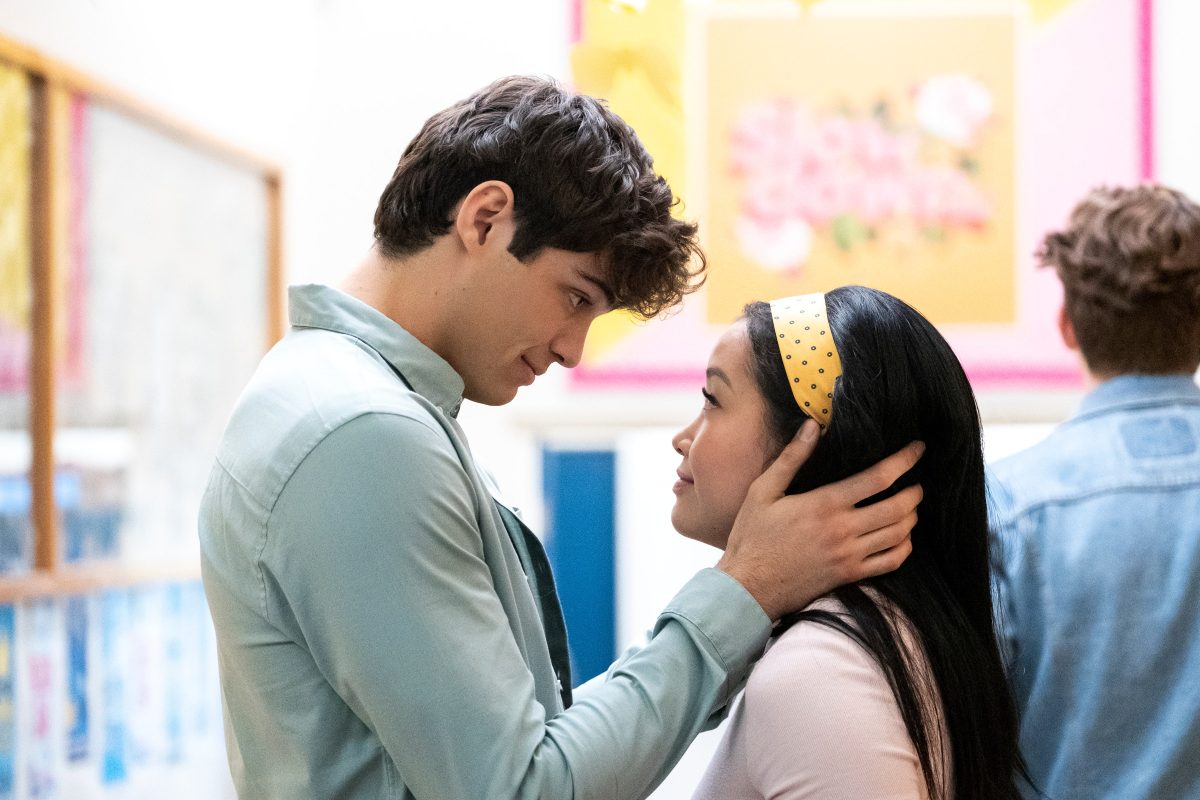
To All the Boys I’ve Loved Before (2018) tells the story of Lara Jean Covey, a teenage girl who struggles to navigate family dynamics and high school. After her younger sister, Kitty, sends letters that Lara Jean wrote to each boy she had feelings for growing up, Lara Jean finds herself in a fake relationship with Peter Kavinsky, one of the letter recipients. The purpose of their fake relationship is to make Peter’s ex-girlfriend, Gen, jealous and to give Lara Jean an excuse to avoid talking to Josh, another letter recipient and the ex-boyfriend of Lara Jean’s older sister, Margot. The start of their relationship is fantastical and comical, which can be seen as a nod towards how unrealistic many teen romance movies can be. By the end of the movie, Lara Jean and Peter have fallen for each other decide to make their fake relationship a real one.

At the beginning of To All the Boys I’ve Loved Before, Lara Jean is depicted as someone fascinated by romance. She is portrayed as being aware of romance movies’ too-good-to-be-true nature, yet she continues to be a fan. At one point, Lara Jean says that she enjoys reading and writing about love but thinks that real love can be scary. This part of the movie addresses the ease of romantic relationships portrayed in romance movies and how real love can be daunting. Lara Jean’s commentary is part of what makes the To All the Boys series stand out compared to other romance movies. While this series contains many fantastical and embellished romantic elements, it also explicitly acknowledges that fantasy plays a role in a majority of romance films and novels.

While parts of To All the Boys I’ve Loved Before address the conflict between realism and fantasy that can be found in romance movies, there are certain elements of the movie that lend themselves to the fantastical side of romance. Lara Jean finds herself surprised by how easy it is to be with Peter during their fake relationship. Her previous expectations that love is hard and scary seem to be challenged by how effortless her relationship with Peter is, despite the fact that their relationship up until this point is a fantasy.

As the story progresses, other people begin to plant doubt in Lara Jean’s mind about Peter. Despite the fact that Lara Jean and Peter’s relationship is turning from fake to real, Lara Jean begins to lose trust in Peter and decides to end the relationship. At this point in the movie, the audience sees a glimpse of what real relationships can look like. Romantic relationships aren’t always easy, and this conflict between Lara Jean and Peter helps show that. After ending the relationship, Lara Jean struggles with whether or not she should fight for the relationship. She says that if she acknowledges she likes him, then she risks losing him. Again, this internal conflict gives the audience a glimpse of all the emotions and thoughts that can go into relationships.

Despite all the nods to realism in To All the Boys I’ve Loved Before, the movie has the classic happy ending that is found in most romance movies. In the final scene, Lara Jean approaches Peter and makes a bold declaration of her love for him. He embraces her back fully and declares that he loves her. They kiss and walk off the screen together. While this scene makes the audience feel good, it’s not always how things in romantic relationships work out. Sometimes, romantic partners go from happy to unhappy and decide to split for good. According to the romance genre, however, romantic couples almost always completely resolve their conflict and end up happier than ever. Maybe this is the case for some people outside of romance movies, but the cycle of happy to hurt to happy again isn’t as mainstream as romance movies make it out to be. 

The story picks back up again in the sequel, To All the Boys: P.S. I Still Love You (2020). The movie opens with Lara Jean saying that romance isn’t a fantasy, it’s her real life: “Fairy tales aren’t real, but sometimes happily ever after is.” Lara Jean and Peter go on romantic dates with grand gestures such as flowers and gifts. On one of these dates, the couple promises not to break each other’s hearts. 

The movie very quickly leans into a fantastical portrayal of romantic relationships. One of Lara Jean’s biggest struggles throughout the move is if she should stay with Peter or pursue a relationship with John Ambrose. She comments that things are easy with John Ambrose whereas she overthinks a lot in her relationship with Peter. This comment solidifies a common theme throughout the movie series: if a romantic relationship is meant to be, it’ll be easy. It seems as though Lara Jean’s measure for a good relationship is one that’s always comfortable and effortless, and the plot rarely contradicts this. 

In one of the final scenes of the movie, Lara Jean and John Ambrose share a romantic moment that culminates in a kiss. She quickly realizes, however, that she wishes she was kissing Peter instead. She and Peter reunite, and he tells her that he loves her. The movie ends with the couple kissing and floating up to the sky, a direct nod at the fantastical elements of their relationship.  Despite all of the representation of realistic romantic relationships in this sequel, the audience is left with the same feeling they had at the end of the first movie. The audience now has the idealistic notion that love can conquer all. While some real relationships are often able to overcome conflict and challenges and come out stronger, conflict resolution is not always as easy and complete as it’s made out to be in movies like this one.

In the final movie of the series, To All the Boys: Always and Forever (2021), Lara Jean and Peter face the problem that every high school couple faces: college. They decide to both attend Stanford. When Lara Jean isn’t accepted, they make an alternate plan for her to attend UC-Berkeley and transfer to Stanford after her freshman year. This new plan doesn’t last long, however, because Lara Jean falls in love with NYU. She struggles with how to choose between going to her dream college or being with Peter. When she finally tells Peter that she’s going to NYU, he supports her and reassures her, despite being sad that they will be separated. This conversation between Lara Jean and Peter shows maturity and the ability to communicate. They are faced with a problem that often arises in the real world. They work through it and acknowledge that a long-distance relationship will be difficult.

Things quickly start to go downhill for Lara Jean and Peter, however. After prom, Lara Jean sneaks Peter into her room and gives him a box of mementos to remember her by when he goes to Stanford. Instead of feeling touched as Lara Jean had anticipated, Peter lashes out and says he feels like she’s trying to say goodbye. He believes that it’s inevitable that they will break up once they go to college, so they might as well go ahead and break up. This moment reflects some aspects of realism. The struggle of going to different colleges is very real in high school relationships, and many often do expect to break up. While this scene has dramatic elements, it touches on the idea of college posing a very big and real problem for high school couples.

Keeping to the classic romance pattern, things don’t stay bad for long. In a big romantic gesture, Peter shows up in Lara Jean’s backyard and declares his love for her. At the end of the couple’s romantic night together, Peter says that he knows they’ll end up together. This comment signals the movie’s shift back into fantasy. Very few high school couples can say with complete confidence that they know they’ll end up together. Some may, but it seems like a bold comment coming from a boy who hasn’t even graduated from high school.

As the movie closes, Lara Jean says that she’s always wanted the kind of love you see in movies where the boy meets a girl, they break up, make up, and live happily ever after. She then says that life is beautiful and messy and never goes according to plan. She says that love is choosing each other through all of it each day. All of these comments sound nice, but they are extremely idealistic. While Lara Jean is right that life doesn’t always go according to plan, choosing each other every day isn’t as easy as she makes it seem. This comment demonstrates the way the movie often trivializes the work that goes into relationships, thus portraying romantic relationships as more fantastical than realistic.

In conclusion, the To All the Boys series does a better job than most romance movies at providing the audience with a representation of a realistic romantic relationship. The series is not completely based on realism, however, and stays true to many classic themes often seen in romance movies. While the audience, specifically high schoolers, can catch glimpses of what a real high school relationship can look like in To All the Boys, they should be aware of the fantastical romantic elements that remain present. Fans of romance movies don’t need to abandon all their hopes and dreams of love, but they should keep in mind that the romantic standards portrayed in romance movies aren’t the same standards that should be set in the real world. At the end of the day, romance movies provide the audience with a pleasurable experience, and the fantastical elements present don’t warrant that people stop watching them. There is a certain awareness that romance movies aren’t meant to be completely realistic. Romance isn’t bad, but audiences should keep in mind that love isn’t always easy, and, as sad as it may be, love doesn’t always conquer all.

Navigating Trauma in a Cruel World with Wanda Maximoff

by Maddy Grumet

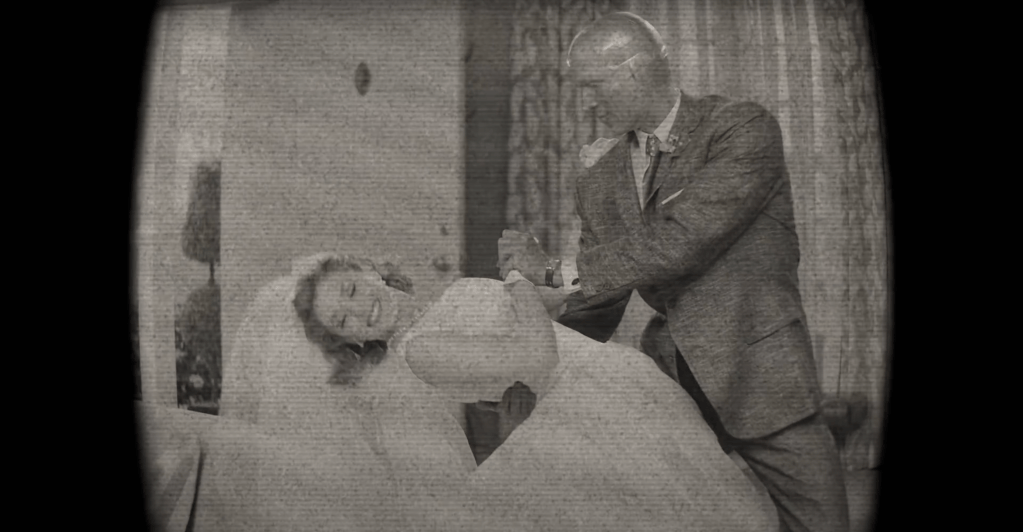
Wanda imagines a world based on conventional gender roles. Still from WandaVision.

In WandaVision, Wanda Maximoff is exhibiting very human maladaptive coping behaviors in the face of grief. In previous Marvel productions, the audience learns that Wanda has experienced an unfathomable amount of loss. With her introduction to the Marvel universe comes the knowledge that her parents had died in a bombing of her home country. In the Age of Ultron Avengers movie, Wanda’s fraternal twin brother, Pietro, is killed in battle. Finally, in Avengers: Infinity War, Wanda watches as her beloved Vision is demolished by Thanos in his pursuit for the infinity stone attached to Vision. In the wake of these traumatic losses, Wanda is forced to confront her pain as she tries to figure out how to navigate a world that has been so cruel to her. 

Trauma is, by one definition, an event outside the range of the human experience. By curating a world without trauma in WandaVision, Wanda is harnessing her superhuman powers in an attempt to control things that are normally beyond human control. For Wanda, a griefless world looks like television. In her younger days, Wanda learned about American culture and life by watching television shows like The Dick Van Dyke Show and The Brady Bunch. The world that Wanda creates in Westview, New Jersey is a projection of what she has seen and learned from these and different traditional American television shows. As a result, Wanda’s vision of a “perfect” world looks like one with traditional gender roles as an embodiment of a happy family and social life. 

In older sitcom shows, gender roles are both prominent and clear cut. Typically, the men are portrayed as helpless breadwinners who prioritize things like beer and sports while the women are portrayed as too smart to be stuck in their housewife and motherly duties. In Episode 1: “Filmed Before a Live Studio Audience,” Wanda and Vision assume these very traditional gender roles in their efforts to entertain Vision’s boss and his wife for dinner. The episode is shot in a “classic sitcom three-camera soundstage setup” (Vulture). Wanda and Vision interact in a slightly awkward, intentionally stiff way throughout the episode, something that is very similar to sitcoms like Bewitched. Wanda assumes the traditional role of “housewife” as she brainstorms ways to satisfy Vision on their upcoming anniversary and, as the episode progresses, scrambles to prepare the food for dinner in an I Love Lucy style. Vision, on the other hand, assumes the traditional role of the husband who provides for the family by working a desk job. Although Wanda and Vision both assume these very traditional roles, they simultaneously poke fun at many of the sexist conventions of the time. By doing so, WandaVision both masters the concept of a traditional sitcom and calls out the sexism that existed in the shows that Wanda used to learn about American life. 

In Episode 8: “Previously On,” WandaVision slightly steers away from the sitcom archetypes and style to dive deeper into Wanda’s traumatic past. In an effort to learn about the origin of her powers, Wanda’s co-character Agnes forces her to confront her grief and the reality of what she has experienced. Agnes walks Wanda through memories of Sokovia and her family, the HYDRA base where Wanda was kept as she developed her powers to help the Nazi-adjacent, her relationship with Vision, and eventually reveals the truth of her curation of Westview. This episode demonstrates a key idea: grief is inescapable. Even Wanda, someone with otherworldly powers, is incapable of escaping her grief and trauma for good. Wanda’s creation of Westview and, as the audience later learns, the version of Vision living there with her demonstrates the extent that people will go to seek remedy in the face of trauma. 

On its surface, WandaVision is a show based on familiar, traditional sitcoms and the life of a grieving Avenger. However, the sitcom acts as a veil for the show’s depiction of some very complex feelings: denial, anger, depression, loneliness, struggle, and, in the end, a form of acceptance. For Wanda, escaping grief means living out her life as a character on a sitcom. However, the show eventually reveals that this escape is not possible; Wanda has to shut down her sitcom and curated reality and come to terms with her trauma. Although not everyone has the power to curate their own worlds in the face of grief, Wanda is demonstrating what it means to be human and to process the pain we feel. 

The Evolution of PRIDE at the 2021 BET Awards

Malaysia Barr

Black Entertainment Television Network (BET)  was founded in 1980 with the sole purpose of having an outlet for black actors, musicians, and media hosts to have their voices heard on an outlet that represented African American culture. As the network grew and evolved, it began to incorporate award shows to highlight the best of black culture in a given year. Several award shows have been implemented, like The Soul Train Awards and BET Hip Hop Awards. But the one award show that stands out from all produced on BET Network is the BET Awards. Established in 2001, this award show is an annual summer event that highlights the achievements of African Americans throughout the year. The award show has grown and evolved, and this year it not only highlighted African American culture but also LGBTQIA+ culture. 

The 2021 BET awards aired on June 27, 2021. The three-hour broadcast was hosted by actress Taraji P. Henson and narrated by rapper M.C Lyte. The show had performances from rappers like Megan Thee Stallion and singers like Jazmine Sullivan. However, the one element of the show that stood out was the subtle recognition and support of members of the LGBTQIA+ community. This was shown through moments with rappers Lil Nas X and Queen Latifah. 

Lil Nas X is an up-and-coming rapper, known for his smash hit “Old Town Road” back in 2018.  For BET to have him perform was a bold move, considering Lil Nas X’s recent blood in shoe and “Montero (Call Me By My Name)” music video controversy in March 2021. For BET to have him perform, shows a position of solidarity on his behalf. The song Lil Nas X Performed was “Montero (Call Me By My Name),” which, as stated earlier, was met with much controversy. During his performance, the rapper had male-only dancers who wore eyeshadow. This subtle makeup, for many, is breaking barriers as many men have traditionally felt that eye makeup was ‘unmanly’. As the performance neared its end, Lil Nas X and one of his male dancers kissed. In the broadcast, a closeup of transgender actress MJ Rodriguez (Pose) was shown clapping proudly. Lil Nas X’s performance was daring, reflecting the current state of LGBTQIA+ representation in today’s culture. In 2022, there are male cover men for popular makeup magazines, and television shows like Pose show many different same-sex relationships. While there have been same-sex relationships featured on television shows in previous decades, the difference is that today those relationships are featured with more storylines, complexity, and realness than before.  BET is showing its solidarity with the present-day representation by celebrating an outwardly gay black male rapper performing on their stage.

Lil Nas X performing “Montero” at 2021 BET Awards

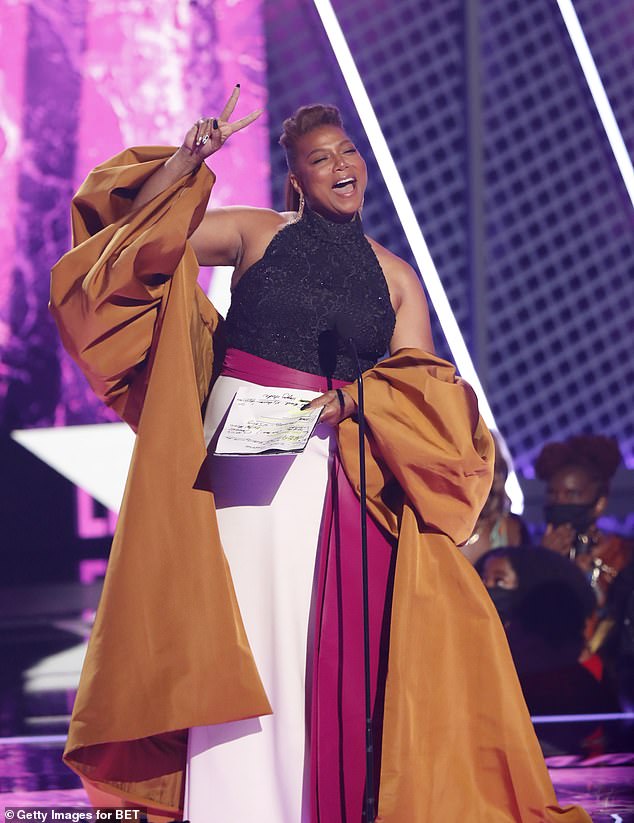
Another moment where BET recognizes more members of the LGBTQIA+ community on the show is during Queen Latifah’s speech. Latifah is a rapper, actress, and singer that has been a prominent figure in African American culture since the 1990s. Latifah has evolved as a person as she has multiple decades of success as both an actress and rapper/singer. Recognizing her achievements, BET chose her as the recipient of the  Lifetime Achievement Award. During her speech, she recognized many people and at the end, shouted out “Happy Pride!”.

Latifah ending her speech at the BET Awards 2021

While this is a small way of expressing love for the community that she is a part of, this marks an important evolution of how members of the LGBTQIA community are perceived. Queen Latifah’s sexuality has been in question for years, and she has never publicly confirmed her sexual orientation. However, this changed in her acceptance speech during the BET Awards. Her subtle recognition of her sexuality reflects the culture in which she grew up. Contrary to that of Lil Nas X, Queen Latifah did not have the powers of social media that allowed for different subgroups of people to be represented freely. Instead, she had to form herself into a straight, black woman. This is reflected through her television and sitcom roles where she has traditionally had male love interests. For example, on Living Single, her character “Khadijah” had an on-again-off-again boyfriend named Scooter; in The Last Holiday, her male love interest is a rapper turned actor LL Cool J. The only role in which Queen Latifah pushed boundaries with sexual identity was in the film Set It Off (1996), where she played “Cleo” who had a female love interest. As Latifah comes from an era where same-sex relationships were repressed, this is shown through her small yet bold recognition of her sexuality.  This is why her speech at the BET Awards show is so important because she openly expresses something that she has kept quiet for years. 

The 2021 BET Awards had several important moments representing members from the LGBTQIA+ community. While Lil Nas X and Queen Latifah had different approaches to demonstrating their sexuality, they were equally as important because it showed a once marginalized group taking center stage.  These moments help show how the BET awards are adapting to encompass a broader, intersectional celebration of black culture.